
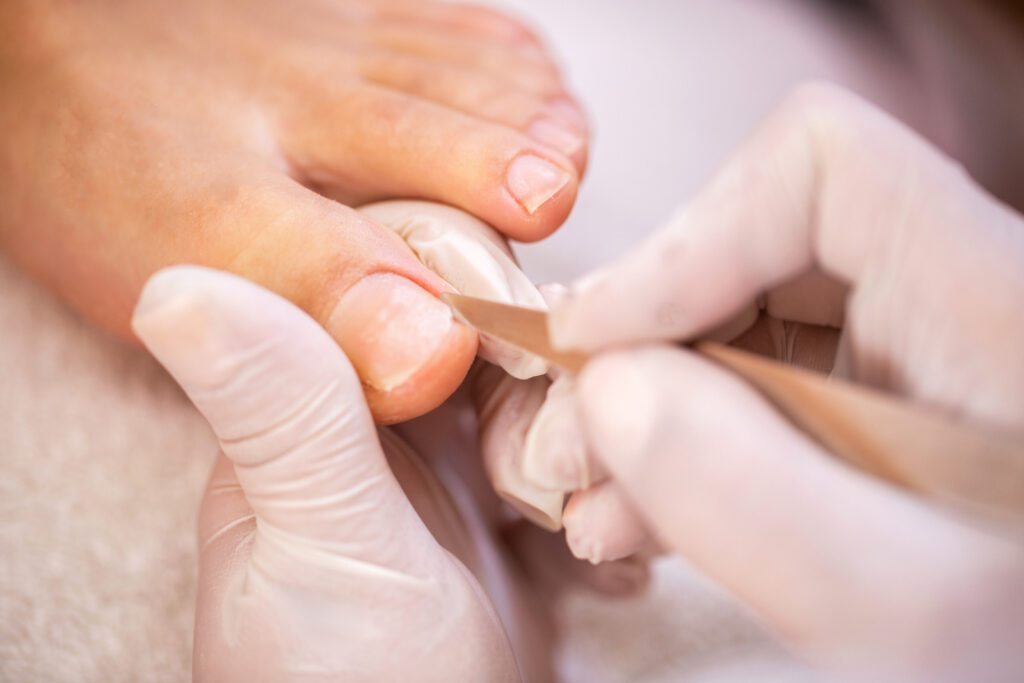
An ingrown toenail sounds minor. Until it isn’t. Redness. Swelling. That sharp, pulsing pain that won’t let shoes on. Many patients start searching for podiatrist treatment for ingrown toenail when home fixes stop working. This guide lays out what actually happens next. Conservative care. Surgical options. And how podiatrists usually decide which path makes sense.
Why Ingrown Toenails Become a Bigger Problem
Ingrown toenails develop when the nail edge digs into surrounding skin. Often from tight shoes. Poor trimming habits. Sometimes genetics. Truth be told, once infection sets in, the problem rarely fixes itself.
Clinical foot-care data shows nearly 20% of podiatry visits involve ingrown toenails. And recurring cases are common without proper treatment. That’s why podiatrist treatment for ingrown toenail focuses on long-term relief, not quick cover-ups.
Conservative Care: When Surgery Isn’t Needed
Early-stage cases usually start here. Simple. Effective. No cutting involved. Conservative treatment may include:
- Professional nail trimming
- Lifting the nail edge with sterile packing
- Antibiotic ointments if infection is mild
- Footwear adjustments
Studies suggest mild ingrown toenails respond well to conservative care in about 70% of cases. Especially when swelling is minimal.
A podiatrist wauwatosa will often recommend this route first. Makes sense. Less invasive. Lower cost. Short recovery. Still, conservative care requires follow-through. Miss appointments. Ignore shoe advice. Problems return.
When Surgery Becomes the Better Option
Some nails just don’t behave. Chronic pain. Repeated infections. Drainage. At that point, surgery is often the cleanest fix.
Common surgical options include:
- Partial nail avulsion (removing part of the nail)
- Matrixectomy to prevent regrowth
- Local anesthesia only. No hospital stay
According to podiatric case reviews, surgical treatment has a success rate above 90% for recurrent ingrown toenails. Recovery? Usually a few days of limited activity. For patients seeing a podiatrist wauwatosa, surgery is often recommended after two or more failed conservative attempts.
What Podiatrists Usually Recommend
Let’s face it. No one jumps straight to surgery unless needed.
Most podiatrists follow a simple rule:
- Mild pain. No infection. Start conservative.
- Recurrent or infected cases. Surgery offers lasting relief.
The goal of podiatrist treatment for ingrown toenail is prevention as much as pain relief.
Ingrown toenails don’t fix themselves. Waiting makes things worse. Whether care stays simple or turns surgical depends on timing, severity, and follow-through. Early treatment saves time. And toes.
FAQs
Does ingrown toenail surgery hurt?
The procedure is done under local anesthesia. Pain during surgery is minimal.
How long does recovery take after surgery?
Most patients resume normal activity within 2–5 days.
Can ingrown toenails come back after surgery?
Recurrence is rare, especially when treated by a qualified podiatrist wauwatosa.